Fish Passage Action Team Blog
Stories, updates, and insights from the field — tracking progress, sharing wins, and supporting better fish passage around the world.
Redefining Fish Passage Parameters
Hi everyone,
It’s been a while since we last shared any fish passage updates – and this one is worth the wait. With a long weekend ahead, you’ll have plenty of time to dig in!
The reality is that many of our current regulations and the information underpinning them have significant gaps and are overdue for reform.
The Fish Passage Action Team has put together the key principles behind assessing fish passage and designing effective fishways at stream-infrastructure crossings. Drawing on revisited foundational research, emerging knowledge, and extensive field experience, we’ve produced work we think is genuinely valuable:
- Presentation on hydraulic complexity & flow characteristics and how this affects fish.
- Document on reframing fish passage – from single metric & meaningless averages to structured complexity.
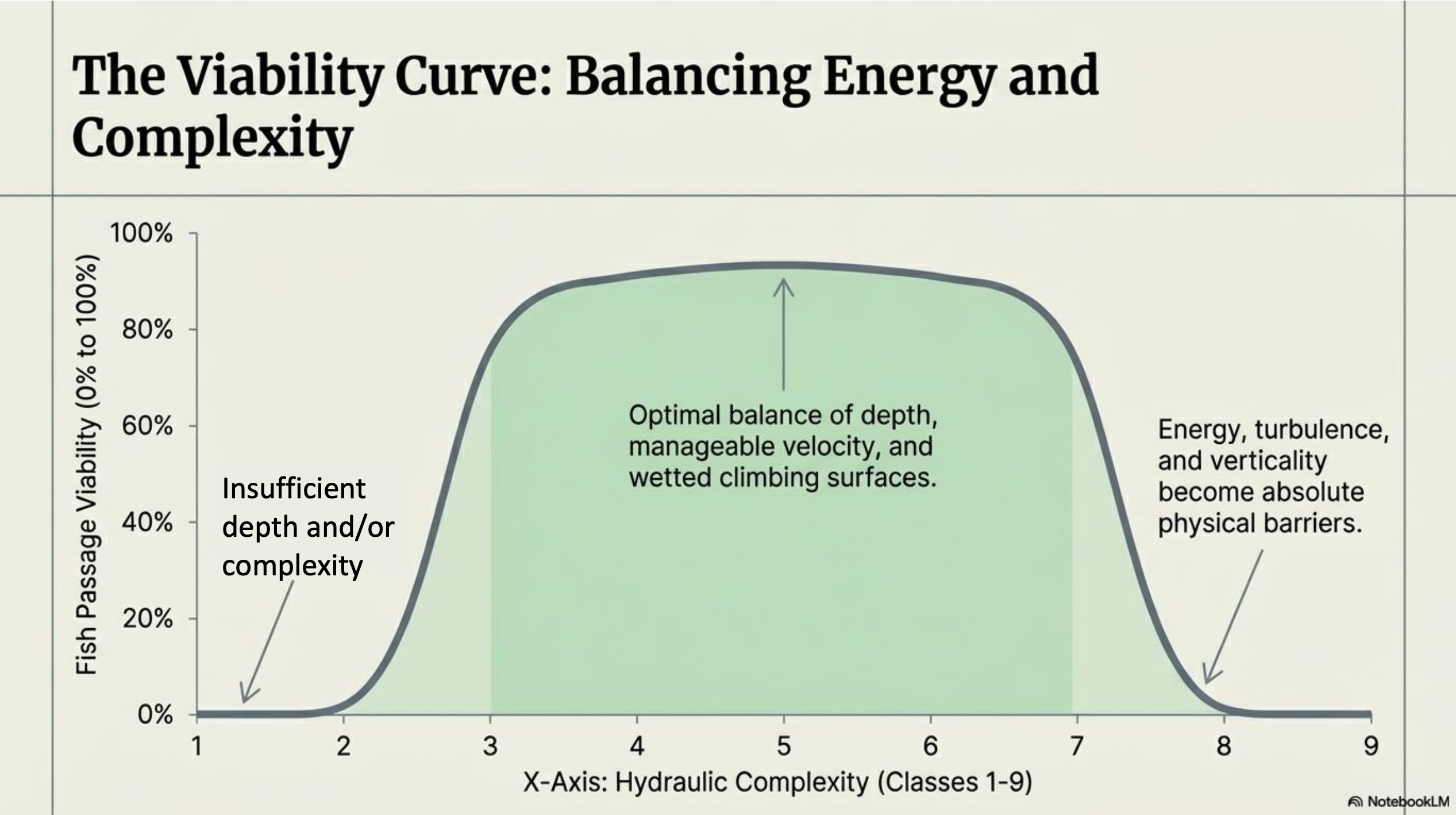 Click to view presentation If fish passage matters to you and you care about getting it right, please read the document and review the PowerPoint. Then pass it along – to regulators, engineers, ecologists, and practitioners alike – so we can move beyond outdated designs and methodologies once and for all.
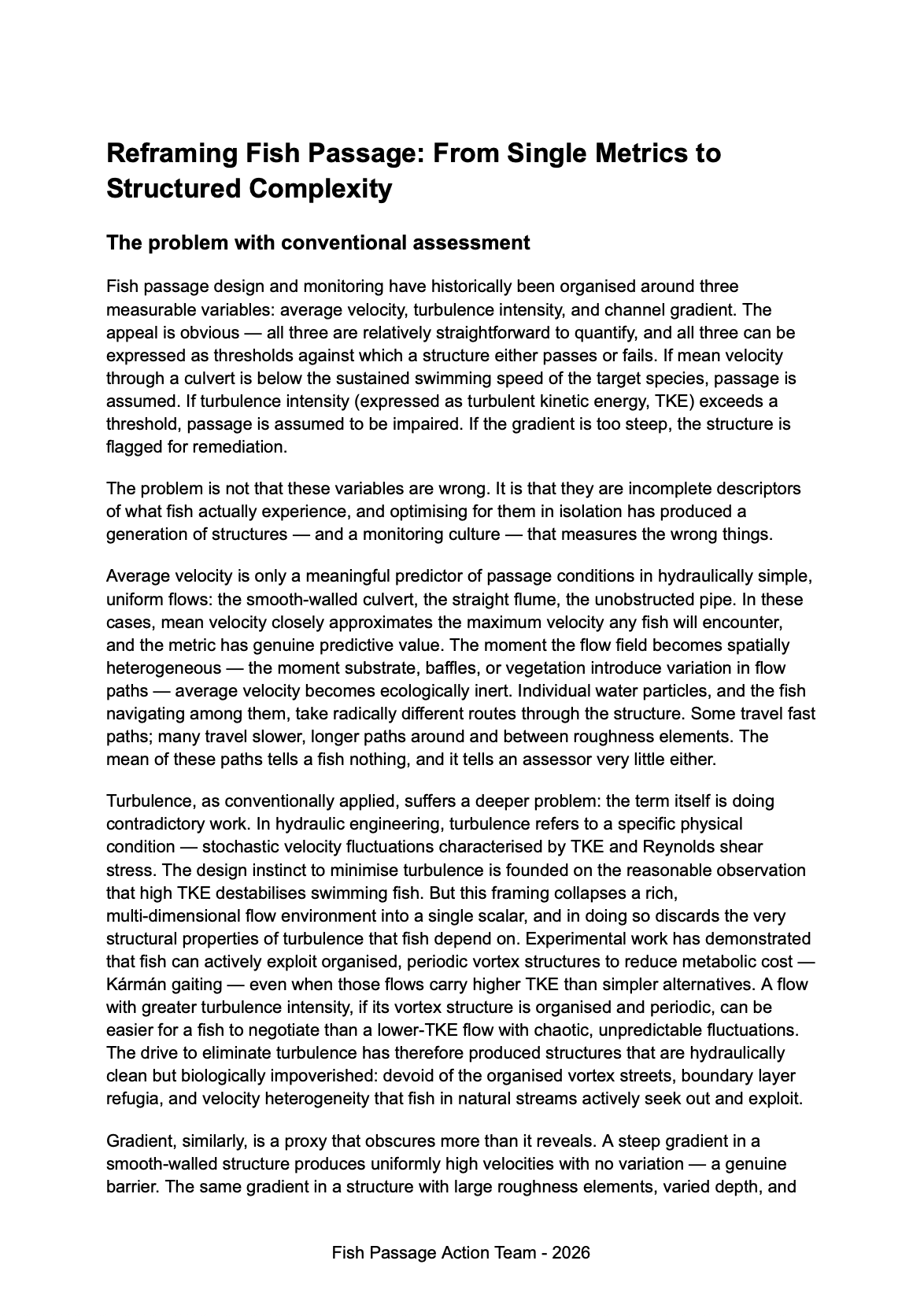 Click to view key principles document
Great news! Tide/Flood Gates need no longer be a fish barrier – there is a solution
Hi everyone,
Today we are looking at a couple of examples in Australia where a new type of tide gate has been installed to improve fish passage and upstream water quality.
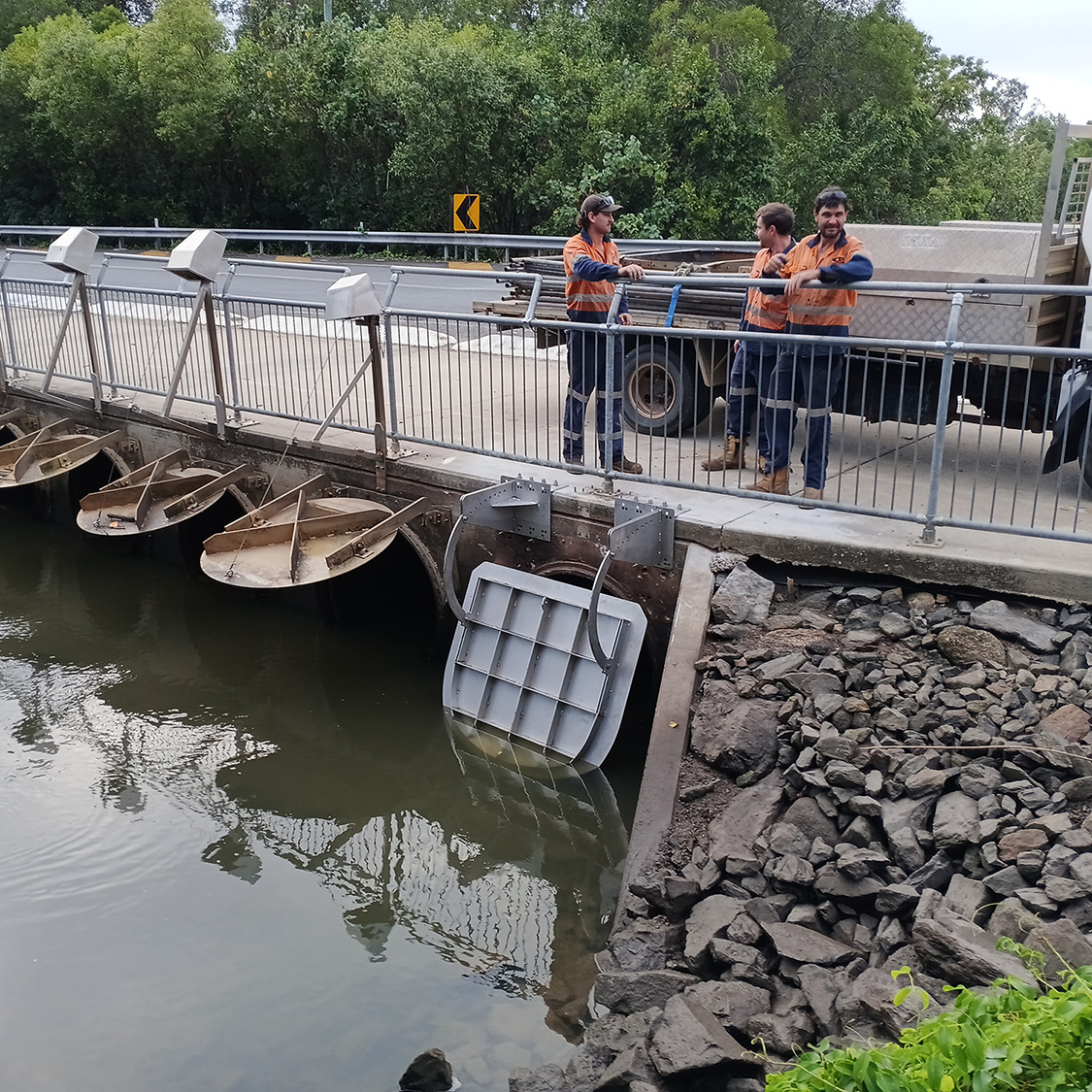
First up is Cairns, where the site previously used six standard flap gates that were manually held open for fish passage and released during king tides or flood events.
One of these has now been replaced with a fully automated, adjustable stainless steel tide gate. The remaining gates are expected to be upgraded in the near future.
 The next site is in Mackay, where two large wooden gates were replaced with ATS FFGs to improve fish passage and reduce sedimentation through improved flushing.
The concept and function is same for both the Cairns and McKay versions.
Note: The “double-skin” is for the extra strength required to cover the 3M span.
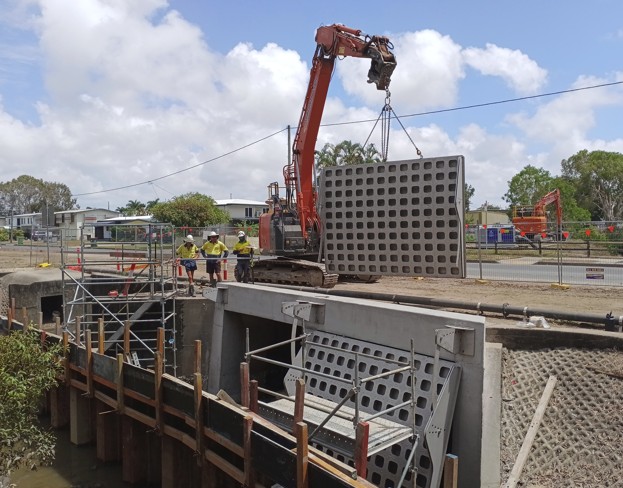 These two upgrades were commissioned to meet Department of Agriculture, Fisheries and Forestry (DAFF) requirements.
If you want to know more about Fish Friendly Tide/Flood Gates feel free to reply to this email!
Awesome Free Culvert Baffle Design Calculator
Hi everyone,
Baffles have proven a very effective way for providing fish passage in culverts.
We’ve been hard at work over the past few months developing an interactive culvert baffle design calculator.
We know culvert design can be a tricky subject to get your head around, and we were worried it could be putting some people off. Having seen a groundswell of culverts being designed to improve fish passage, we saw the need for a more standardised approach while still taking into account individual site characteristics.
We’re excited to announce a new resource for fish passage practitioners – the Culvert Baffle Design Tool, created by the Fish Passage Action Team and kindly hosted by ATS Environmental.
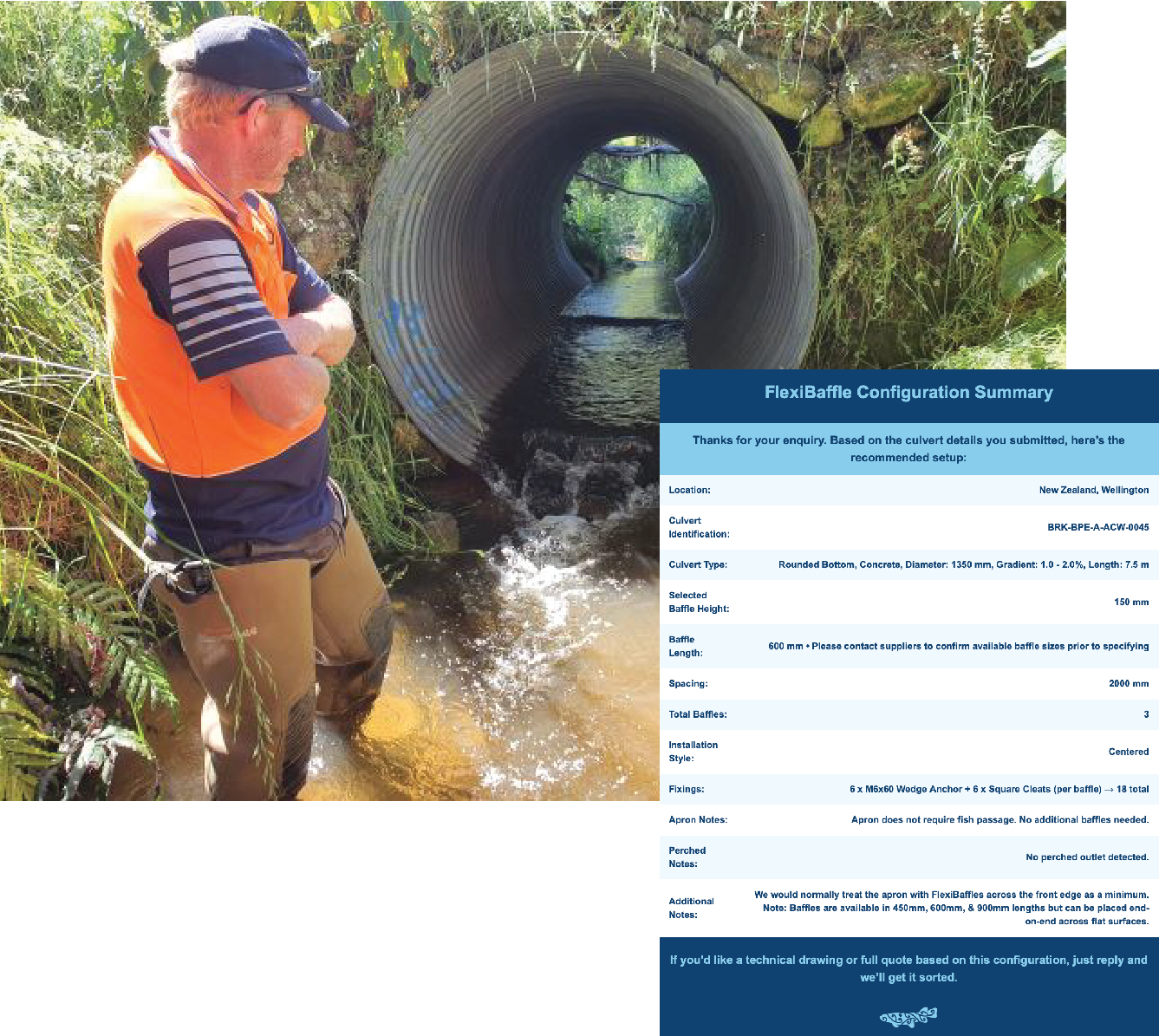 Click here to try it now – it’s free! This free online tool takes the guesswork out of baffle design for new & exisitng culverts. Enter your culvert characteristics and the tool will automatically generate:
- A set of schematic drawings showing the baffle configuration
- A list of materials required, including baffle sizes, types, and fixings for installation
From training to action: Gisborne gets started
Happy New Year everyone!
Before the holidays, we were on the ground in Gisborne, on the east coast of New Zealand’s North Island, helping kick-start something exciting.
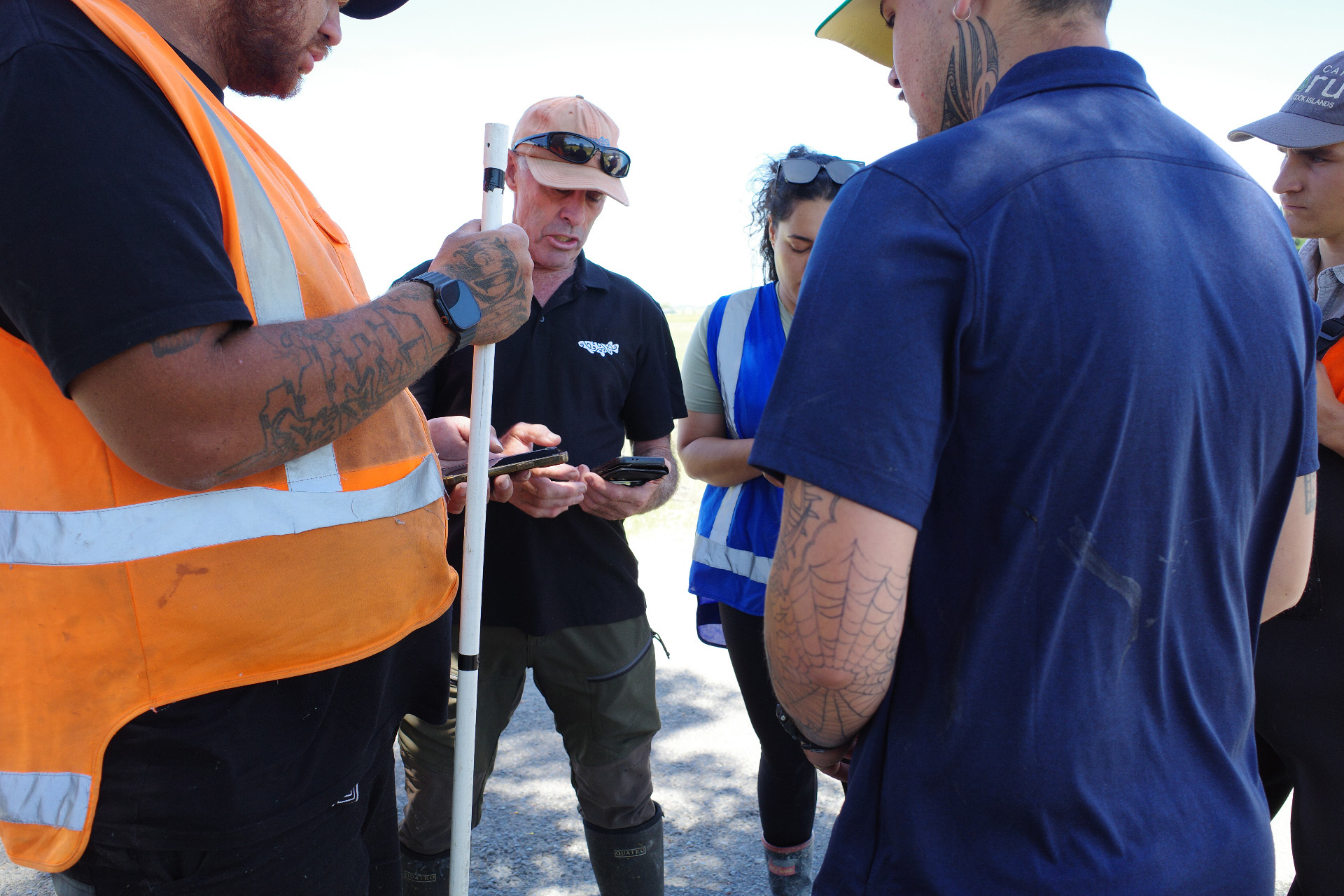
Gisborne District Council and local iwi (the Indigenous Māori tribes of the region) came together for a hands-on training day – learning to use the Structures in Waterways field app to start identifying barriers to fish passage across their area.
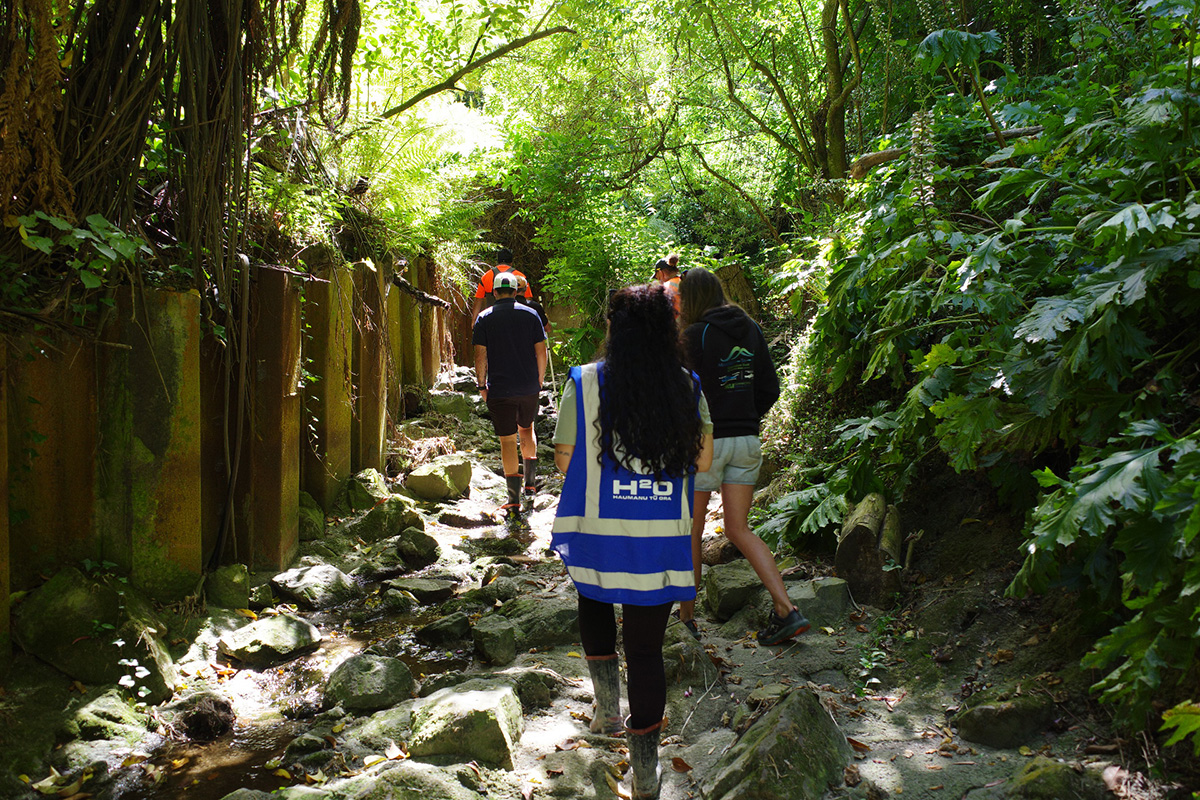 The app lets teams assess culverts and other in-stream structures in the field, recording characteristics to help determine whether they’re barriers to fish migration or not. All that data flows straight into a central Sharepoint, building a clear picture of what’s out there and where the priorities are.
But the data doesn’t just sit there. Once structures are assessed, the information feeds into planning for remediation – helping teams understand what materials are needed, estimate costs, and decide where to focus their efforts.
 Gisborne’s journey is just beginning, but to show you where this leads, here’s a snapshot from the Bay of Plenty region, where this same process is well underway.
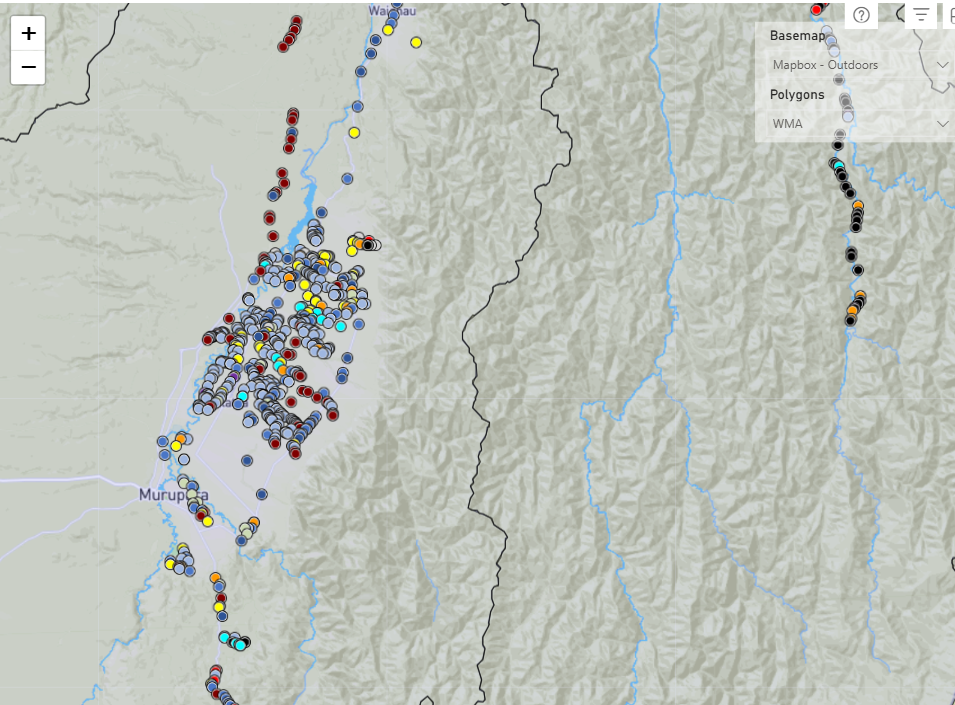 Every dot represents a structure that’s been assessed. Every dot is progress.
We’ll be following Gisborne’s journey as they build their dataset and move toward remediation. Watch this space.
First coho salmon for 70 years!
Happy holidays everyone.
There is now 4000+ of us sharing our stories and experiences in the fish passage space!
The government of Surrey have shared some good news with us.
Bon Accord Creek, Surrey, BC, Canada, sees first coho salmon for 70 years following the installation of flexible culvert baffles (weirs) into the concrete channel that was a fish barrier.
This project saved over $200k that a remove-and-replace option would have cost and brought instant success.
See the links below
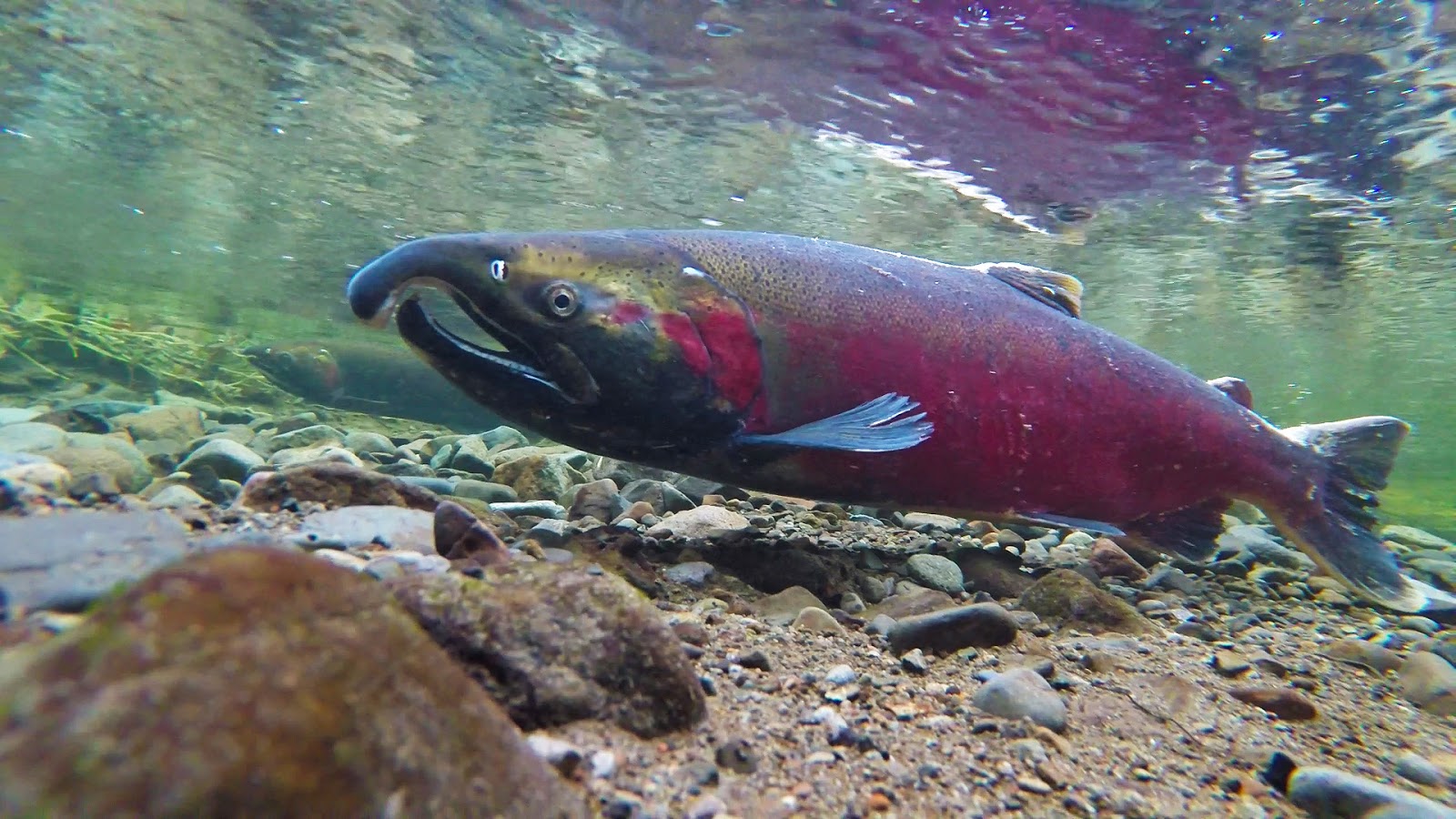 Vancouver City News article
Salmon return to Surrey creek after 70 years | CityNews Vancouver
TV news clip below
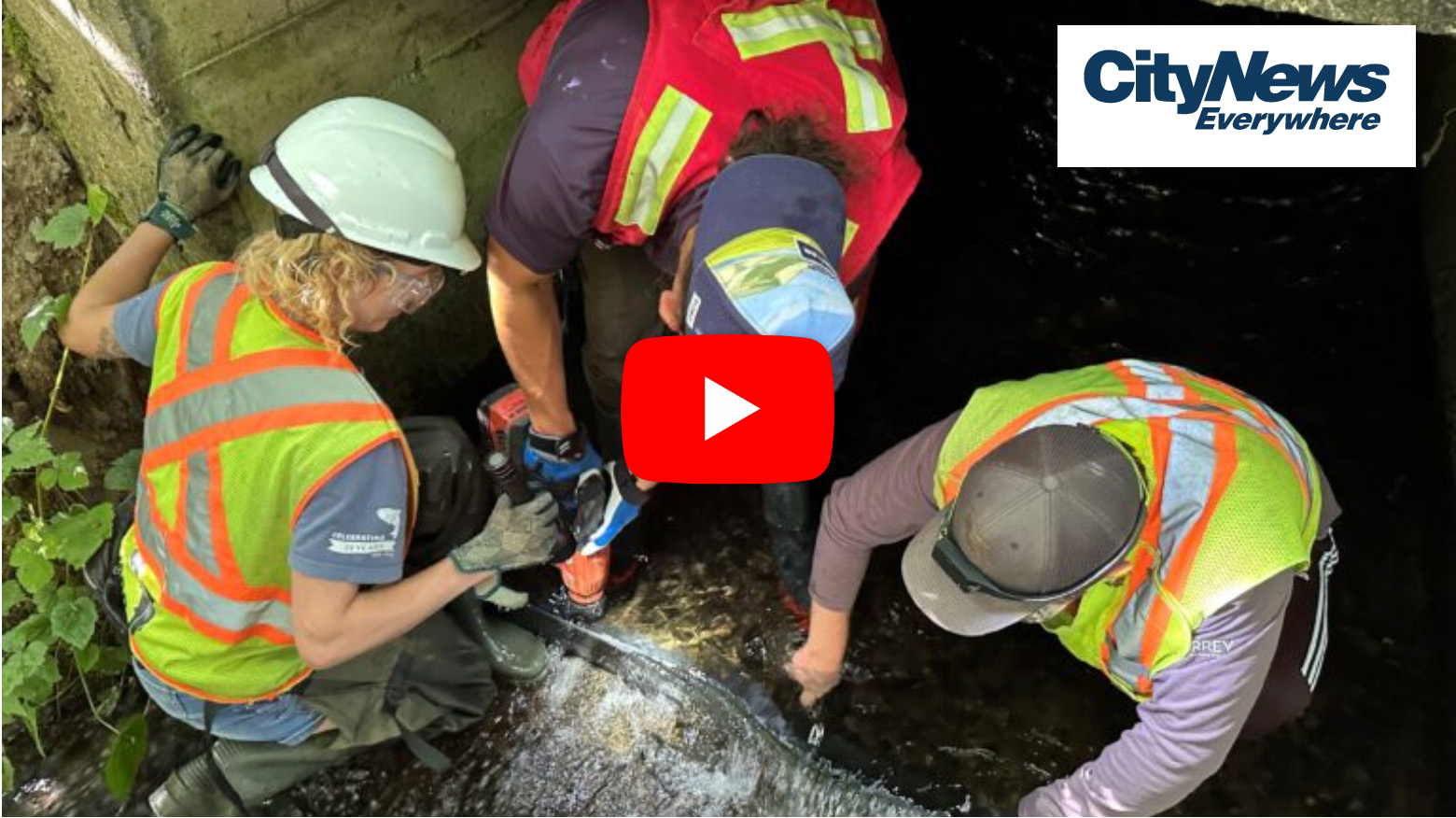
Fish Passage Remediation Example
Hi everyone,
Check out the video below showing a great example of fish passage remediation targeting small-bodied NZ fish species.
The fixes address:
- The perched apron
- The perched culvert outlet
- Shallowing of the apron
- Fast laminar flow within the culvert
Note: This culvert should have been embedded to both retain bed material and allow good fish passage.
If you are serious about restoring fish passage, watch and share this fun video essay.
This video essay created by the Fish Passage Action Team outlines the easy to follow process for undertaking multi-site fish passage remediation programs.
The key is to make the most of data collected to plan actual work programs, and not just produce dots on a map for reporting up the bureaucratic food-chain.
Don’t just watch, please share so we can all make a difference.
Region Wide Fish Passage Program
Hi everyone
Check out this video released by the Ministry for the Environment (NZ) showing the great work Kūmānu Environmental and Tasman District Council have been doing to restore fish passage in the Tasman Region. This 5 year project will allow 7,000+ desktop assessments, 4350+ field assessments and 1,566 in-stream structure remediation’s to be completed. That’s a lot of waterways being connected and a lot of happy fish! Enjoy!
Stay tuned for upcoming mail-outs explaining how to implement region wide fish passage programs.
Pacific Lamprey Video
Hi everyone,
One of our Fish Passage Action Team members, Kelly, captured this unusual footage whilst recently travelling in the USA to attend the International Fish Passage conference.
Pacific Lamprey are often overlooked when it comes to fish passage. These ancient creatures once outnumbered salmon in the rivers of the Pacific Northwest.
They are ecologically and culturally significant for indigenous people across the Pacific. Like salmon, they spend most of their lives at sea, returning to freshwater to spawn and die, bringing protein, minerals and nutrients inland from the ocean.
This short video shows lamprey at the top of the Bonneville Dam fish ladder on the Columbia River in the western USA.
They do seem to struggle to make it to the top, and there are many more dams to pass before reaching their spawning grounds.
The other fish in the window are salmon and American shad.
Enjoy the video [HERE]

Fish Passage from North to South NZ
Hi everyone
It’s always great to see a growing number of people getting stuck into fish passage throughout New Zealand.
Aided by the newly released Fish Passage Remediation Training Aid 2022, teams of practitioners are better equipped than ever before to restore connectivity to our waterways.
Check out some pics from the field:


Join our mail-out!

“99% of barriers in Rangitaiki fixed with simple solutions under $200”
– RNZ on ATS Environmental initiative
“Installed flexible baffles in culvert—juvenile galaxiid seen migrating days later.”
– Nelson City Council Trial Update
COPYRIGHT © – All rights reserved – Site by Studio Hughes