Fish Passage Action Team Blog
Stories, updates, and insights from the field; tracking progress, sharing wins, and supporting better fish passage around the world.
If you are serious about restoring fish passage, watch and share this fun video essay.
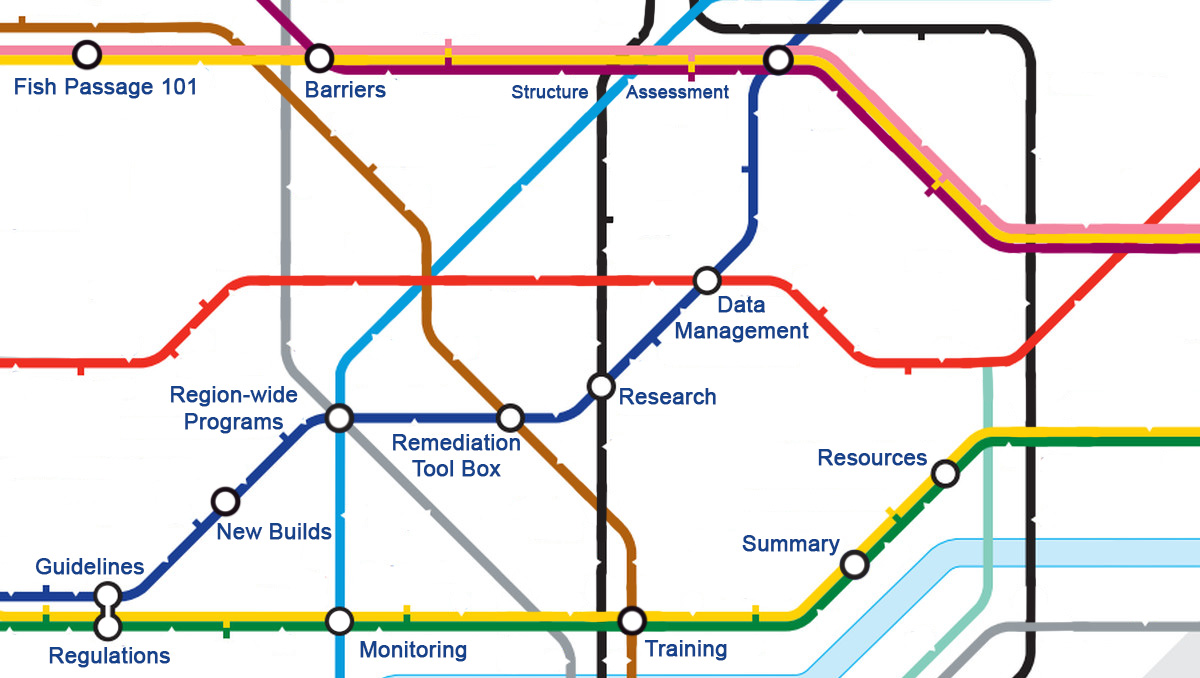
This video essay created by the Fish Passage Action Team outlines the easy to follow process for undertaking multi-site fish passage remediation programs.
The key is to make the most of data collected to plan actual work programs, and not just produce dots on a map for reporting up the bureaucratic food-chain.
Don’t just watch, please share so we can all make a difference.
Region Wide Fish Passage Program
Hi everyone
Check out this video released by the Ministry for the Environment (NZ) showing the great work Kūmānu Environmental and Tasman District Council have been doing to restore fish passage in the Tasman Region. This 5 year project will allow 7,000+ desktop assessments, 4350+ field assessments and 1,566 in-stream structure remediation’s to be completed. That’s a lot of waterways being connected and a lot of happy fish! Enjoy!
Stay tuned for upcoming mail-outs explaining how to implement region wide fish passage programs.
Pacific Lamprey Video
Hi everyone,
One of our Fish Passage Action Team members, Kelly, captured this unusual footage whilst recently travelling in the USA to attend the International Fish Passage conference.
Pacific Lamprey are often overlooked when it comes to fish passage. These ancient creatures once outnumbered salmon in the rivers of the Pacific Northwest.
They are ecologically and culturally significant for indigenous people across the Pacific. Like salmon, they spend most of their lives at sea, returning to freshwater to spawn and die, bringing protein, minerals and nutrients inland from the ocean.
This short video shows lamprey at the top of the Bonneville Dam fish ladder on the Columbia River in the western USA.
They do seem to struggle to make it to the top, and there are many more dams to pass before reaching their spawning grounds.
The other fish in the window are salmon and American shad.
Enjoy the video [HERE]

Fish Passage from North to South NZ
Hi everyone
It’s always great to see a growing number of people getting stuck into fish passage throughout New Zealand.
Aided by the newly released Fish Passage Remediation Training Aid 2022, teams of practitioners are better equipped than ever before to restore connectivity to our waterways.
Check out some pics from the field:


New and improved protocol for monitoring fish passage
Hi all,
Tasman District Council in NZ has recently undertaken an unprecedented 23 day fish passage trial assessing fish movement through a twin barrel culvert.
The trial involved capturing and counting fish daily as they naturally migrated upstream through the culvert pipes. One of the pipes was remediated to improve fish passage, while the other pipe was left unremediated.
The remediated culvert was fitted with fish baffles and a ramp.
The results showed a great improvement in fish passage following remediation.
Check out the full report HERE.

Sustainability Award
Hi everyone,
A big congratulations to our friend Mike Thomas for being awarded the Downer Sustainability Award.
The team at ATS Environmental were privileged to help Mike modify the RAMMs asset management app to include data that allows Downer and Tasman District Council to identify, remediate and manage fish barriers across their road network.
Many roading authorities in NZ use RAMMs as their primary asset management tool, so there will be significant savings in meeting the regulatory requirements by monitoring structural integrity and fish passage in the one site visit.
Thanks everyone, and good on ya Mike!


World Fish Migration Day
Fish Passage Remediation Training Aid launch.
Hi everyone, We have been working away and are excited to announce the launch of the latest Fish Passage Training Aid and Fish Passage Action Team website!
This has been launched in conjunction with World Fish Migration Day, we hope you find it useful, and we are always open to comments and feedback.
You’ll always be able to find the latest version on the Fish Passage Action Team website under our Fish Passage Resources tab, in the section Educational tools. We hope you have a good rest of your weekend.

Fish Passage Remediation Washington, USA
Hi everyone,
We have recently received this video showing fish passage restoration in Whatcom County Washington.
One of our team members; the director of SSA Environmental, Shane Scott, has been working hard to restore culverts/weirs across the United States.
We absolutely love seeing restoration work done around the world.
Shane has worked with the Nooksack Salmon Enhancement Association to install Flexi-Baffles to increase the depth and reduce velocity in this fast-flowing culvert.
Fish Passage Webinar
Hi Everyone,
We hope everyone is safe and well!
We loved listening to Kelly Hughes (of ATS Environmental) speak for the EIANZ Webinar covering the big picture fish passage subject.
So much so that we’ve taken the recorded webinar and posted it to our YouTube channel for all the people who missed it.
Webinar invite | Managing assets with respect to meeting fish passage requirements
Changing the narrative towards mass remediation across infrastructure networks.
Everyone passionate about restoring fish passage and reconnecting waterways should take the time to sit in on this webinar. https://www.eianz.org/events/event/webinar-managing-assets-with-respect-to-meeting-fish-passage-requirements It is on Wednesday 9th March – 3 PM NZDT
Join our mail-out!
“99% of barriers in Rangitaiki fixed with simple solutions under $200”
– RNZ on ATS Environmental initiative
“Installed flexible baffles in culvert—juvenile galaxiid seen migrating days later.”
– Nelson City Council Trial Update
COPYRIGHT © – All rights reserved – Site by Studio Hughes